My Journey to Life - Daily Study Guide - Contents
- 28 Steps—Introduction
-
Step 1—Scripture
- B1: What we believe
- Q1. Where did the Bible come from?
- Q2. Did Jesus trust the Scriptures?
- Q3. Why should I read the Bible?
- Q4. Have the prophecies of the Bible come true?
- Q5. Is there a unifying theme to the Bible?
- Q6. Can the Bible help me make better choices?
- Q7. Is there one subject more important than another in the Bible?
- Q8. Is Scripture self-authenticating?
- Q9. For whom was the Bible written?
- Q10. Will reading the Bible make me happy?
- Q11. Should I consider the Bible authoritative?
- Q12. How should I study the Bible?
-
Step Two—Our Savior
- B2: What we believe
- Q1. Why do Christians call Jesus their Savior?
- Q2. When did humanity first need a Savior?
- Q3. Where was the Savior born?
- Q4. Did the Savior exist before His birth in Bethlehem?
- Q5. Who did Jesus come to save?
- Q6. Why is the Savior called our substitute?
- Q7. What is the importance of Jesus’ resurrection?
- Q8. Is Jesus the only Savior, or can there be others?
- Q9. Will we ever see our Savior?
- Q10. In what sense is the Savior both our Intercessor and High Priest?
- Q11. What if I reject Jesus as my Savior?
- Q12. How can I accept Jesus as my Savior?
-
Step Three—Salvation
- B3: What We Believe
- Q1. What does “salvation” mean?
- Q2. What motivates God to save us?
- Q3. When was the decision made by the Godhead to redeem humanity?
- Q4. How can I be saved?
- Q5. After I have accepted salvation, is it possible to lose it, to become “unsaved?”
- Q6. How does the scroll of Revelation 5 affect our salvation?
- Q7. Why does God forgive some while punishing others?
- Q8. Why is Christ’s substitutionary death a necessity for salvation?
- Q9. What is the role of blood in salvation?
- Q10. In what way are both Jesus’ life as well as His death necessary for salvation?
- Q11. What is involved in the experience of salvation?
- Q12. Is salvation only a present work, or does it extend to our future?
-
Step Four—The Sanctuary
- B4: What We Believe
- Q1. Where is Scripture’s longest prophecy found, and what does it point to?
- Q2. What does “then shall the sanctuary be cleansed” mean in Daniel 8:14?
- Q3. What exactly happened in heaven at the close of the 2300 day/year prophecy?
- Q4. Why so many biblical references to the earthly sanctuary and heavenly sanctuary?
- Q5. What is the main message of the sanctuary system?
- Q6. What is Jesus doing in the heavenly sanctuary?
- Q7. What is the significance of the sanctuary’s design?
- Q8. What is the correlation to the Day of Atonement and Jesus’ High Priestly ministry?
- Q9. What was the significance of the two goats in the ancient Day of Atonement?
- Q10. How essential to us is the message of Christ’s closing ministry?
- Q11. Who is being judged in the heavenly sanctuary?
- Q12. How does the pre-advent investigative judgment impact my life?
-
Step Five—The Sabbath
- B5: What We Believe
- Q1. What is the Sabbath?
- Q2. For whom was the Sabbath made?
- Q3. When does the Sabbath begin and end?
- Q4. What is the purpose of the Sabbath?
- Q5. How should the Sabbath be kept?
- Q6. How do we know today’s seventh day is the Sabbath of Jesus’ time?
- Q7. Which day did Jesus and His disciples observe?
- Q8: If Jesus kept the seventh-day Sabbath, and His disciples continued to observe Sabbath after His resurrection, why do most Christians today observe Sunday?
- Q9. Does it matter, on which day we worship?
- Q10. In what way is the observance of the fourth commandment a sign?
- Q11. Weren’t the commandments nailed to the cross and replaced with the New Covenant?
- Q12. Is the Sabbath to be a day of joy or somberness?
-
Step Six—The Second Coming of Jesus Christ
- B6: What We Believe
- Q1. What will Jesus’ coming be like?
- Q2. When is Jesus coming?
- Q3. What does the vision of Daniel 2 say about the time of Jesus’ coming?
- Q4. What will Jesus’ Second Coming be like?
- Q5. Why is Jesus coming back to earth?
- Q6. Who will be taken to heaven when Jesus comes?
- Q7. Why would I want to go to heaven?
- Q8. When Jesus comes, what happens to those who are not followers of Jesus?
- Q9. How can we know for sure that Jesus is coming again?
- Q10. Is Jesus’ coming delayed?
- Q11. What’s Christ’s relationship between His heavenly sanctuary work and His Second Coming?
- Q12. How will organized religion impact religious freedom just before Jesus’ return?
- Q13. How should the doctrine of the Second Coming affect my life?
-
Step Seven—State of the Dead (Death and Resurrection)
- B7: What We Believe
- Q1. Are our souls immortal? Do we live on after death, as our physical bodies disintegrate?
- Q2. If our souls aren’t immortal, then what is a soul?
- Q3. What about Adam and Eve? Weren’t they created immortal ?
- Q4. What is death like?
- Q5. If death is a state of permanent unconsciousness, is there no life after death?
- Q6. So, do the righteous then receive immortality at the first resurrection when Jesus comes?
- Q7. If the Bible does not teach that the soul is immortal, where did that theory originate?
- Q8. What happens to the dead who never accepted Jesus as their Savior, or who did not remain faithful to Him?
- Q9. Is death a part of God’s creative process?
- Q10. Didn’t Saul speak to Samuel after Samuel died (1 Samuel 28)?
- Q11. What about the thief on the cross?
- Q12. Why does the biblical teaching on what happens when we die matter?
-
Step Eight—The Three-Person Godhead
- B8: What We Believe
- Q1. Why are there so many conflicting theories about God?
- Q2. If human wisdom is not always helpful in knowing God, how does He reveal Himself?
- Q3. How is it possible to wholeheartedly love the Creator if we don’t know Him?
- Q4. Is there only one God or three?
- Q5. Are there Scriptural examples of plurality within the Godhead?
- Q6. Are all three members of the Godhead doing the same thing?
- Q7. What member of the Godhead is the focus of Scripture?
- Q8. Where did the doctrine of the Trinity originate?
- Q9. Were there demonstrations of the Holy Spirit’s divine work before Pentecost (John 14:17)?
- Q10. How long has God existed in a trinitarian nature?
- Q11. How can the doctrine of the 3-in-1 Godhead make my life better?
- Q12. Does our understanding of the doctrine of the Godhead really matter?
-
Step Nine—God the Father
- B9: What We Believe
- Q1. What does God the Father, have to do with us and our daily living?
- Q2. When the Old Testament references “God;” is it God the Father or God, the Son?
- Q3. What is the relationship of God the Father to God, the Son (Jesus)?
- Q4. Is God the Father, in the Old Testament exacting and rigid Compared to the merciful and loving God of the New Testament?
- Q5. Why is it common to think of the Father as the vengeful God of the Old Testament?
- Q6. Has any human being seen God?
- Q7. What does “a covenant God” mean?
- Q8. Is Jesus personal and relational while the Father is stern and detached?
- Q9. Can God the Father be described as our Redeemer, as Jesus is?
- Q10. Who forgives our sins?
- Q11. Does God punish unfaithfulness and disobedience to Him?
- Q12. What Scriptural images can help us have a better understanding of the loving nature of God the Father?
-
Step Ten—Jesus, God’s Son
- B10: What We Believe
- Q1. Who is Jesus Christ, and how is He important?
- Q2. Where does the Bible first mention Jesus’ role as humanity’s Redeemer?
- Q3. At what point did God make the “Jesus as Redeemer” plan?
- Q4. At Christ’s first advent, what evidence should have helped people identify Him as Messiah?
- Q5. Does the Bible speak of these Old Testament predictions being fulfilled in Jesus?
- Q6. What does Paul refer to when he writes that God sent His Son to earth in “the fullness of time” (Galatians 4:4)?
- Q7. Though the system of animal sacrifices ended at Christ’s death, can they still inform our understanding of Christ’s work for us?
- Q8. Was Jesus’ death and resurrection foretold in Scripture?
- Q9. Scripture calls Jesus both “only begotten” and “firstborn.” Does this mean Jesus is a created being?
- Q10. What are the two natures of Christ?
- Q11. What are Christ’s attributes or roles?
- Q12. How do I accept Jesus?
-
Step Eleven—God, the Holy Spirit
- B11: What We Believe
- Q1. Who is the Holy Spirit?
- Q2. Does the Bible teach that the Holy Spirit is equal to God?
- Q3. What is the function of the Holy Spirit within the Godhead?
- Q4. How essential is the Holy Spirit to our existence?
- Q5. Can we grieve away the Spirit of God?
- Q6. What relationship is there between the outpouring of the Spirit of God at Pentecost and the outpouring of God’s Spirit just before Jesus’ Second Coming?
- Q7. What is the purpose of the Latter Rain?
- Q8. What are the conditions for this special endowment of the Spirit in the Latter Rain?
- Q9. What relationship is there between the Latter Rain of God’s Spirit and the Loud Cry of Revelation 18?
- Q10. How often do we need to be converted by the Holy Spirit?
- Q11. Is it possible that there could be a counterfeit Spirit not sent by God?
- Q12. How does the Spirit help us live our lives as followers of Jesus?
-
Step Twelve—God’s Creation
- B12: What We Believe
- Q1. Is the creation account in Genesis 1 and 2 both literal and historical?
- Q2. Are Genesis 1 and 2 two separate and contradictory Creation accounts?
- Q3. What’s the biblical relationship between Creation and the Sabbath?
- Q4. Can we find a Creation motif in the New Testament?
- Q5. Which member of the Godhead spoke our world into existence?
- Q6. Does the Bible identify a starting point for our world’s history?
- Q7. Does it matter whether God created our earth in seven literal, contiguous 24-hour periods, or over millions of years?
- Q8. How important is it for a Christian to reject the macro-evolutionary theory of origins?
- Q9. What relationship is there between a literal Creation narrative and our salvation?
- Q10. What is the ‘mega-narrative’ of Creation?
- Q11. What does the biblical Creation narrative tell us about trusting God, even in times of chaos and societal disruption?
- Q12. What does Creation have to do with worship?
-
Step Thirteen—Human Nature
- B13: What We Believe
- Q1. How did humanity begin?
- Q2. What are the components of a living being?
- Q3. What was humanity’s nature and purpose at Creation?
- Q4. Since God is the Creator of humanity, is He also the Creator of evil?
- Q5. How did human nature change when Adam and Eve sinned?
- Q6. How can humans receive forgiveness and freedom from sin?
- Q7. How could evolutionary theory potentially impact the biblical view of human nature?
- Q8. Was there a covenant of grace even before humanity’s nature changed at the fall?
- Q9. What is the significance of God creating humanity as male and female?
- Q10. Is it possible for humanity in its fallen state to overcome sin?
- Q11. In what ways does the doctrine of humanity impact the Christian’s life?
- Q12. What is humanity’s future state?
-
Step Fourteen—Marriage and the Family
- B14: What We Believe
- Q1. Where did marriage originate?
- Q2. What is the purpose of the home?
- Q3. What does it mean to “walk together” (Amos 3:3)?
- Q4. What does it mean to be “one flesh?”
- Q5. What does God’s ideal marriage look like?
- Q6. How did Adam and Eve’s fall affect marriage?
- Q7. What are deviations from God’s ideal for marriage?
- Q8. What are the responsibilities of parents and children to each other?
- Q9. What are the biblical roles of the husband and wife?
- Q10. How does a single person find community within the church?
- Q11. What qualities should one seek in a spouse?
- Q12. What impact will Bible believers have on society at the end of time?
-
Step Fifteen—The Great Controversy
- B15: What We Believe
- Q1. Where did evil originate?
- Q2. Who are angels, and how did Lucifer deceive them into rebellion against God?
- Q3. How was sin, with its guilt, pain, disease, and death, introduced to Planet Earth?
- Q4. Did God foresee the introduction of sin to His newly created planet?
- Q5. What is the “rescue plan” that God devised before sin’s introduction into our world?
- Q6. What are the objectives of heaven’s plan of salvation?
- Q7. What was the impact of sin and rebellion on humanity?
- Q8. What is the pivotal issue in the life-and-death struggle between good and evil?
- Q9. Is the great battle between good and evil confined to our planet alone?
- Q10. How does the great controversy explain the mystery of suffering?
- Q11. Why does God allow sin and suffering to continue?
- Q12. What will be the outcome of the great controversy between Christ and Satan?
-
Step Sixteen—Baptism
- B16: What We Believe
- Q1. What is the purpose of baptism?
- Q2. If I was already baptized as an infant, is it necessary for me to be re-baptized?
- Q3. Are baptism and salvation related?
- Q4. Does baptism guarantee salvation?
- Q5. Does baptism need to be by immersion, or can it be by sprinkling or pouring?
- Q6. What is the significance of baptism?
- Q7. What does it mean to be “dead to sin” in the rite of baptism?
- Q8. How does baptism inform our understanding of Paul’s words “alive to God”?
- Q9. In what way is baptism a symbol of our covenant relationship with God?
- Q10. Do we receive the Holy Spirit at our baptism, as Jesus did?
- Q11. Can one just be baptized into Jesus and not join a church?
- Q12. What are the qualifications for baptism?
-
Step Seventeen—Growing in Christ
- B17: What We Believe
- Q1. How is it possible to grow in our walk with Jesus?
- Q2. What does it mean to die to self?
- Q3. What else does Jesus’ death on the cross have to do with our spiritual growth in a post- modern world?
- Q4. How does newness and growth in the Christian’s life begin?
- Q5. How can we tell if there is spiritual growth in our lives?
- Q6. How does this growth in Christ impact our human relationships?
- Q7. What does the expression “cheap grace” mean in the context of growth in Christ?
- Q8. How can we ensure that we are growing in worship, witness, hope, and unity?
- Q9. What is the relationship between a Christian’s spiritual growth and salvation?
- Q10. In what ways do supernatural forces seek to retard our growth in grace?
- Q11. What is the whole armor of God that Paul says we must take up to fight off the powers of darkness?
- Q12. What is the relationship between Christian growth and community? God’s ideal for Christian growth takes place in the community of faith. Fellow believers organize together for service, evangelism, encouragement, outreach, and witness. Jesus instructed the early church to fellowship together to receive a special outpouring of the Spirit to enable and strengthen their sharing of the Good News.
-
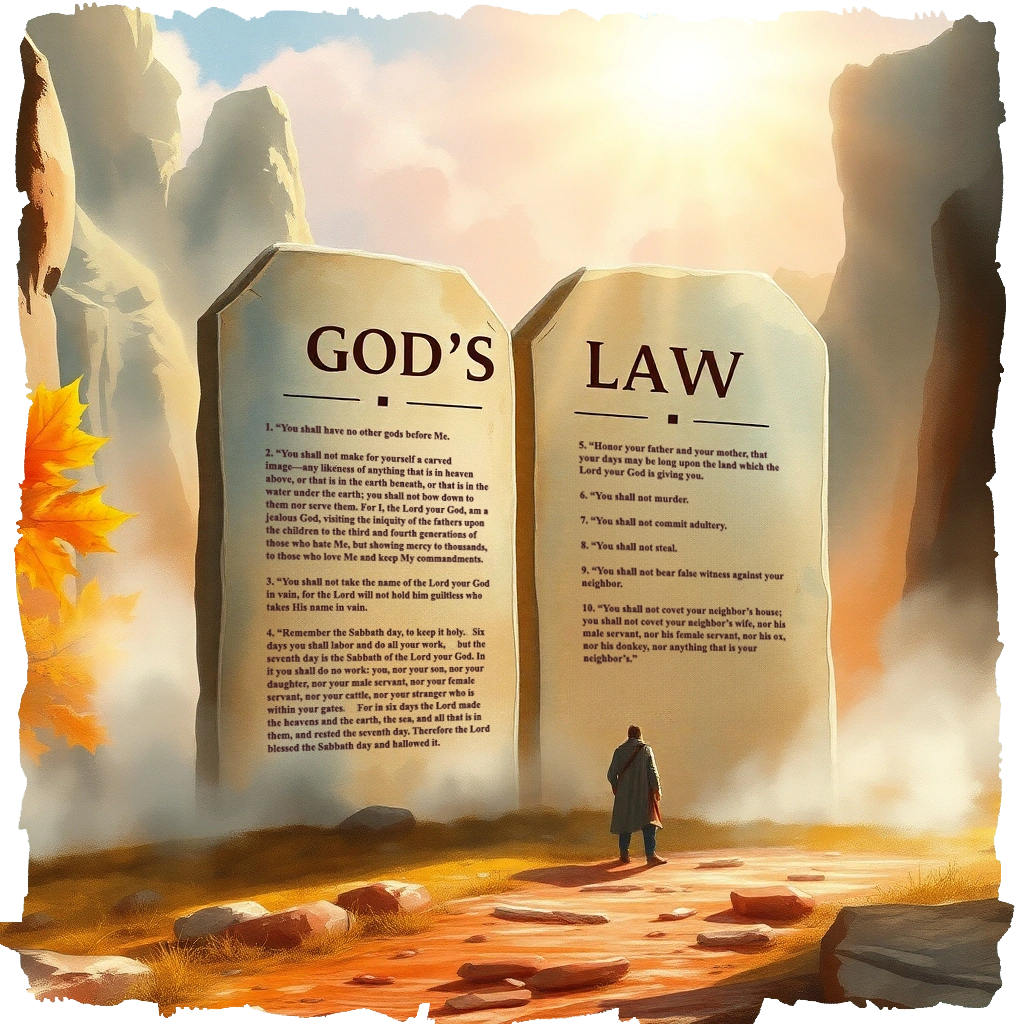
Step Eighteen—God’s Law
- B18: What We Believe
- Q1. What is meant by the “Law of God?”
- Q2. How can the law of God be perpetual and enduring for all people, if it was fulfilled at the cross at the beginning of the new covenant?
- Q3. Does Colossians 2:13, 14 mean that the Ten Commandments were nailed to the cross and are thus no longer binding for us?
- Q4. Did the law exist before God wrote it on tables of stone at Sinai?
- Q5. Did Jesus replace the Ten Commandments with a new commandment based on love (Matthew 22:37-40)?
- Q6. If we are saved by faith, is keeping the law of God still necessary?
- Q7. What does it mean to be free from the condemnation or curse of the law?
- Q8. What is the purpose of the Ten Commandments?
- Q9. In Old Testament times God often blessed nations and individuals in proportion to their obedience to His law. Is that principle still true today?
- Q10. What is the relationship between the law and the gospel?
- Q11. What role does God’s law play in end-time events?
- Q12.How can I love God’s Law?
-
Step Nineteen—Christian Behavior
- B19: What We Believe
- Q1. An entire Bible study on Christian behavior?
- Q2. Since we are saved by grace, does what we eat and drink matter to God?
- Q3. What are some general principles of living healthfully?
- Q4. What about recreation?
- Q5. What biblical principles guide human sexuality?
- Q6. Can pornography be an innocent way to heighten married sexual pleasure or provide sexual release for a young person not ready for marriage?
- Q7. Are there Biblical principles to guide the Christian in his or her dress?
- Q8. How can a Christian live both in the world and separate from it?
- Q9. How should a Christian behave in the areas of stewardship?
- Q10. What other Christ-like virtues will be seen in a Christian’s behavior?
- Q11. Becoming holy like God is a tall order!
- Q12. How can I find motivation and strength to make these changes to my thinking, and incorporate these principles into my life?
-
Step Twenty—Spiritual Gifts and Ministries
- B20: What We Believe
- Q1. When Christ ascended, He gave gifts to His followers. What are those spiritual gifts?
- Q2. What are the prerequisites to receiving spiritual gifts?
- Q3. What is the purpose of spiritual gifts?
- Q4. What are the greater gifts Paul references in 1 Corinthians 12:31?
- Q5. Are the gifts of the Spirit eternal?
- Q6. How does Satan seek to tarnish the spiritual gifts?
- Q7. How does Paul’s analogy of the different parts of the body and their valuable functions illustrate the need for unity in diversity?
- Q8. How do I know what my spiritual gifts are?
- Q9. What happens if I don’t use my spiritual gifts?
- Q10. How important is it for church leadership to identify spiritual gifts before asking members to volunteer in a specific capacity?
- Q11. Does Satan counterfeit God’s spiritual gifts?
- Q12. What is the correlation between spiritual gifts and the end of all things?
-
Step Twenty-one—The Gift of Prophecy
- B21: What We Believe
- Q1. What is a biblical prophet?
- Q2. What are the functions of a biblical prophet?
- Q3. How did biblical prophets receive and communicate messages?
- Q4. Do prophetic writings have to be original to be inspired?
- Q5. Did the gift of prophecy cease to exist with the closing of the Biblical canon?
- Q6. How should we test someone who claims to have the spiritual gift of prophecy?
- Q7. On what basis does the Seventh-day Adventist Church claim that the gift of prophecy was active in the life of Ellen White?
- Q8. What is the purpose, role, and function of Ellen White in the Seventh-day Adventist church?
- Q9. What has been the impact of Ellen White’s life and writings ?
- Q10. What is the relationship between Ellen White’s writings and the Bible?
- Q11. Did Ellen White influence the beliefs of the Seventh-day Adventist church?
- Q12. What does the Bible say about the presence of the gift of prophecy in God’s last (remnant) church before Jesus comes?
-
Step Twenty-two—The Remnant and Its Mission
- B22: What We Believe
- Q1. What is the remnant?
- Q2. When did the remnant begin to appear?
- Q3. What correlation is there between “the man of sin” and “the remnant?”
- Q4. In what sense does today’s “remnant” build on the Protestant Reformation?
- Q5. What is “the remnant’s” responsibility?
- Q6. What is the message of the first angel of Revelation 14?
- Q7. What is the message of the second angel of Revelation 14?
- Q8. What is the message of the third angel of Revelation 14?
- Q9. What connection is there between Israel as the chosen covenant people of God and the concept of the end-time remnant?
- Q10. Does literal Israel today have end-time remnant significance?
- Q11. Who is today’s remnant?
- Q12. How does God’s end-time remnant ultimately triumph?
-
Step Twenty-three—The Church
- B23: What We Believe
- Q1. What is the meaning of the word “church”?
- Q2.What is the Rock upon which the church is founded?
- Q3. What does the Bible say about the origin, nature, and characteristics of the church?
- Q4. What is the mission of the church?
- Q5. How does the Old Testament church differ from the New Testament church?
- Q6. What are some of the metaphors the Bible uses to help us understand the concept of “church”?
- Q7. What is the difference between the visible and invisible church?
- Q8. What are the prerequisites to church membership?
- Q9. How important is church membership?
- Q10. What are the functions of church organization?
- Q11. What is the relationship between the Holy Spirit and the church?
- Q12. What is the future of the church?
-
Step Twenty-four—Unity in the Body of Christ
- B24: What We Believe
- Q1. As Jesus approached his death on the cross, what subject consumed Him?
- Q2. How important is church unity?
- Q3. How is it possible to achieve the unity for which Jesus prayed?
- Q4. What is the hope that the united church shares?
- Q5. Does Biblical unity require uniformity?
- Q6. What is the basis of the believer’s unity?
- Q7. How does Christ’s New Commandment relate to unity?
- Q8. In what ways does the cross of Christ enable unity?
- Q9. What are some practical steps to unity?
- Q10. How can harmony be restored if there is evidence of disunity in the church?
- Q11. What does Acts 15 story of the Jerusalem Council teach about unity in the church?
- Q12. In what way might the Second Coming of Jesus be hastened through unity in the body of Christ, His church?
-
Step Twenty-five—Stewardship
- B25: What We Believe
- Q1. What is “Stewardship?”
- Q2. Why do we practice stewardship?
- Q3. What does it mean to “tithe?”
- Q4. Are there biblical examples of tithing?
- Q5. Does the Bible say how tithes should be used?
- Q6. How do offerings differ from tithe?
- Q7. How does the stewardship principle apply to our remaining money after we have returned tithes and offerings to God?
- Q8. What are the categories of stewardship other than monetary?
- Q9. What are the personal blessings and benefits to those practicing Christian stewardship?
- Q10. How does our careful stewardship bless others?
- Q11. How seriously does the Bible consider unfaithfulness in tithes and offerings?
- Q12. In what ways does Jesus serve as the Ultimate Steward?
-
Step Twenty-Six—The Lord’s Supper
- B26: What We Believe
- Q1. What is the history and meaning of “The Lord’s Supper?”
- Q2. Why is the ordinance of foot washing an essential part of the Lord’s Supper service?
- Q3. What do the bread and wine of the Lord’s Supper represent?
- Q4. Why is it important for believers in Christ to participate in the communion service called the Lord’s Supper?
- Q5. How does the “Lord’s Supper” relate to the Passover service described in Exodus 12:3-8?
- Q6. Are there other names for “The Lord’s Supper” used by Protestants?
- Q7. What does it mean to participate in the Lord’s Supper in an “unworthy manner” (1 Corinthians 11:27)?
- Q8. What is the relationship between baptism and the Lord’s Supper?
- Q9. Was the wine of the Lord’s Supper fermented?
- Q10. Does the Bible specify how often the Lord’s Supper should be celebrated?
- Q11. How should we prepare spiritually to celebrate the Lord’s Supper?
- Q12. In what ways is the “Lord’s Supper” more than a mere memorial meal?
-
Step Twenty-Seven—The Millennium and the Eradication of Evil
- B27: What We Believe
- Q1. When does the millennium begin?
- Q2. Who will be destroyed at the beginning of the millennium?
- Q3. What is the first resurrection?
- Q4. Where will the righteous be during the millennium and what will they be doing?
- Q5. What is involved in the millennial judgment of the wicked?
- Q6. What does Revelation 20:1-3 mean when it states Satan will be bound for a thousand years?
- Q7. What is the second resurrection?
- Q8. What is the “Great White Throne Judgment”?
- Q9. Will the hellfire and punishment of the wicked last “forever and ever” (Revelation 14:11)?
- Q10. What would an unquenchable hell that literally burns forever say about the character of God?
- Q11. What is the battle of Armageddon?
- Q12. When is sin eradicated?
-
Step Twenty-eight—The New Earth
- B28: What We Believe
- Q1. Is heaven a literal place?
- Q2. Where is heaven?
- Q3. What is the relationship between heaven and the new earth?
- Q4. What are the qualifications for gaining entry to the new earth?
- Q5. Will there be marriage in the new earth?
- Q6. What is the purpose of the new earth?
- Q7. What will the new earth be like?
- Q8. How does the Bible describe the future realm of the saved?
- Q9. What is the significance of the doctrine of the new earth and heaven’s eternal kingdom?
- Q10. What will NOT be in the new earth?
- Q11. How does the Christian’s belief in heaven and the new earth impact our life on earth now?
- Q12. What will be our greatest joy on the new earth?
- Appendix A—A Short Biographical Sketch of Ellen G. White
- Appendix B—Ellen G. White’s Relationship to The Bible
- Appendix C—Recommended Reading
Q12. What is the relationship between Christian growth and community? God’s ideal for Christian growth takes place in the community of faith. Fellow believers organize together for service, evangelism, encouragement, outreach, and witness. Jesus instructed the early church to fellowship together to receive a special outpouring of the Spirit to enable and strengthen their sharing of the Good News.
B18: What We Believe
Q12. What is the relationship between Christian growth and community? God’s ideal for Christian growth takes place in the community of faith. Fellow believers organize together for service, evangelism, encouragement, outreach, and witness. Jesus instructed the early church to fellowship together to receive a special outpouring of the Spirit to enable and strengthen their sharing of the Good News.
B18: What We Believe